
You ask “are you single?” You ask “you dey see anybody?” You might even ask “when last you check am?” about a car, a phone, a business idea. But there’s one question a lot of us still find hard to ask, even in 2026: “Have you tested recently?”
Nigerians talk about dating, situationships and heartbreak online every single day. Yet HIV testing — one of the most basic acts of self-care in any sexual relationship — still feels like a topic you whisper about, if you talk about it at all.
That silence has a cost. In 2025, the Ministry of Health reported over 102,000 new HIV cases in Nigeria , with Lagos, Rivers and Kano carrying the highest burden. Behind that number are ordinary people — people who look, dress, and live exactly like everyone else.
This is where our new campaign message comes in: Play Safe. Not as a slogan alone, but as a mindset. Testing shouldn’t feel like an accusation or a scandal. It should feel like something you simply do — the same way you’d check your blood pressure or renew your gym membership.
HIV doesn’t Show on the Face
Here’s the truth many people avoid: you cannot look at someone and know their HIV status. Not from their skin, their body, their job, their relationship history, or how “clean” they seem.
HIV has no visible signature. Someone can carry the virus for years, feel completely fine, and have no outward symptoms at all. That’s exactly why guessing — “she looks fine,” “he’s not that type” — is not a strategy. It’s a gamble.
HIV nor dey show for face. The only way to actually know a status, yours or a partner’s, is to test.
HIV is not about “Type”
There’s a stubborn myth that HIV only affects certain kinds of people — a certain lifestyle, a certain class, a certain reputation. It doesn’t work that way.
HIV spreads through specific behaviours, not identities. Anyone who is sexually active, regardless of background, relationship status or how many partners they’ve had, can benefit from knowing their status. Married people test. Long-term couples test. People in their first relationship test. It’s not a red flag on your character — it’s a normal part of adult life.
Letting go of the stereotype is actually what makes testing easier. Once it stops being about “what kind of person gets tested,” it just becomes something you do for yourself.
Why Knowing Your Status Actually Matters
Knowing your status isn’t about fear it’s about control. Here’s what it gives you:
- Clarity. No more assuming, hoping or avoiding the question.
- Informed decisions. You can make choices about protection, partners and your health based on facts, not guesses.
- Peace of mind. Uncertainty is often more stressful than the answer itself.
- Better conversations. It’s easier to talk openly with a partner when you already know where you stand.
- Timely care. If a result needs follow-up, you find out early, when it’s most useful.
Testing doesn’t change who you are. It just gives you information you didn’t have five minutes ago.
Testing Doesn’t Have to Be a Big, Scary Event
For a lot of people, the barrier isn’t the test itself, it’s everything around it. The waiting room. The questions. The fear someone might see you. The stigma if word gets out. The simple inconvenience of finding time to go somewhere.
Those barriers are real, but they’re not permanent. Testing has evolved, and today, private, low-pressure options exist for people who want to know their status without the drama.
Meet CheckNOW– Check By Yourself, Check Privately, Check On the Go.
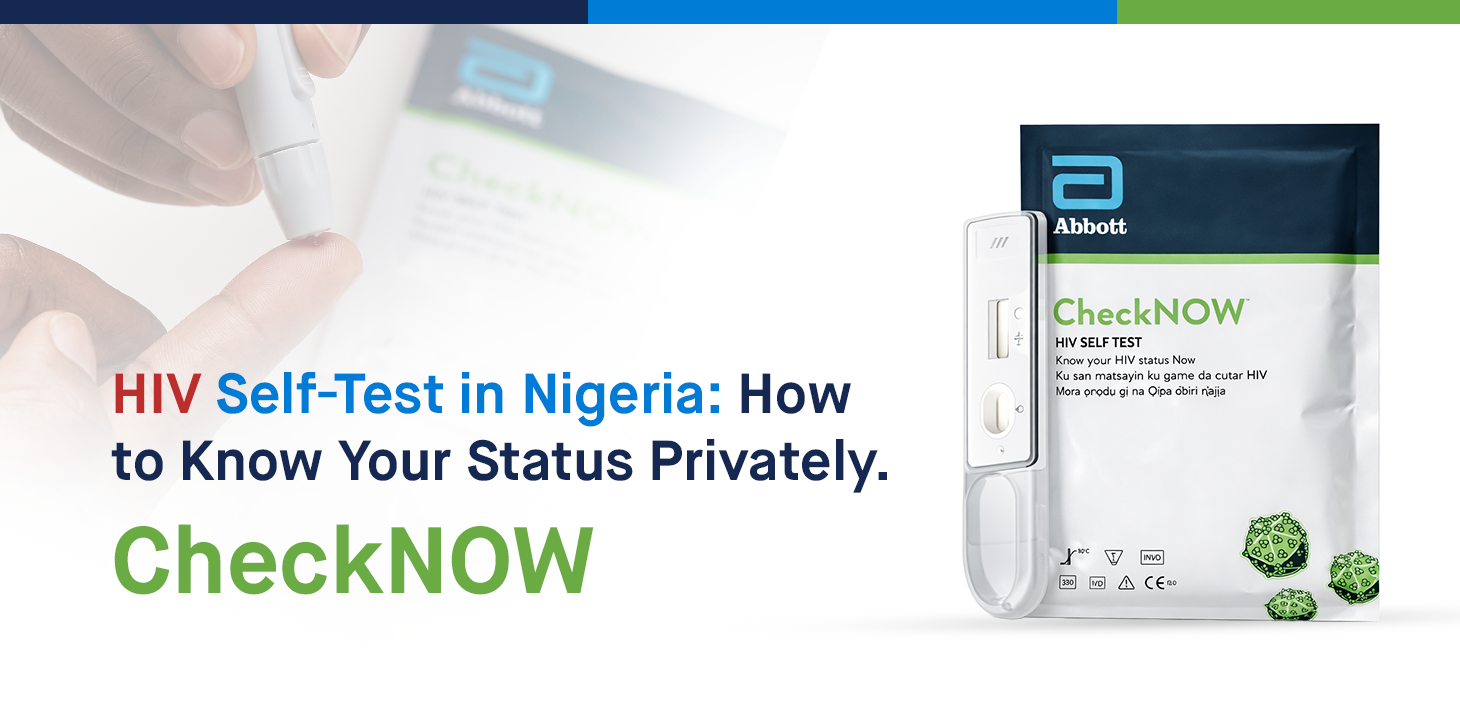
CheckNOW is an HIV self-test kit you can use yourself, at home, on your own schedule to check your HIV status. No appointment. No waiting room. No conversation with anyone you’d rather not have it with.
The name is the instruction, and it breaks down into three parts:
- Check by yourself – you run the test and read the result. The process is yours from start to finish.
- Check privately – nobody has to know you tested unless you decide to tell them.
- Check on the go – the kit fits into your day rather than requiring you to build a day around it.
Here’s how the CheckNOW self-test works, step by step, in few minutes
CheckNOW kits are stocked in a growing network of 20 partner pharmacies across key locations, so getting one is as ordinary as picking up any other item at the counter. Whether it’s your first test or a habit you’re building, the point is to strip out what usually stops people: the time, the exposure, the stigma.
Who Should Consider Testing?
There’s no single “right” moment to test, and testing isn’t only for people who are sexually active. HIV is transmitted through blood as well as sexual contact, which means exposure can happen anywhere sharp objects break skin: a clinic, a barbing salon, a nail bar, a tattoo studio.
Consider testing if your work or grooming routine involves sharp objects:
- You work in healthcare – nurses, doctors, lab scientists, dentists, phlebotomists and handle needles, blades or blood samples
- You’ve had a needlestick injury, a cut from a used instrument, or any accidental blood contact at work
- You’re a barber, hairdresser, manicurist, tattoo artist or piercer, or you use these services regularly
- Clippers, razors, blades or other sharp tools were reused on you without proper sterilisation
Consider testing if you’re sexually active and:
- You’re starting a new relationship
- You’ve been with a new or casual partner
- You want to have an honest conversation with your current partner
- You’re concerned about a possible exposure
- You’d rather make testing a routine part of your health care than wait for a reason
Testing works best alongside, not instead of, other protective measures: single-use or properly sterilised instruments, safe handling of sharp items at work, condom use, and open communication with partners.
An Important Note on Self-Testing
A self-test is a screening tool, not a final diagnosis. If your CheckNOW result comes back reactive (positive), it’s important to follow up with a healthcare provider or a professional testing service for confirmatory testing. This step is normal and necessary, a reactive self-test is the start of the process, not the end of it.
If you’re concerned about a recent possible exposure, don’t rely on a self-test alone. Timing matters, HIV tests need a window period to detect the virus accurately. Speak to a healthcare professional promptly for guidance on next steps.
Breaking the Stigma, One Test at a Time
Let’s be clear about what testing is not:
Testing is not an accusation. Testing is not a sign that someone is “dirty.” Testing is not something to be ashamed of.
Testing is information. And information is what lets you protect yourself, protect the people you care about, and move through your relationships with confidence instead of guesswork.
Knowledge gives you power to make informed decisions. That’s the whole point.
Don’t wait for a scare to check your status. Knowing is simple, private and entirely in your hands with CheckNOW.
Check by yourself. Check privately. Check on the go.
Find CheckNOW at a pharmacy near you, or visit the CheckNOW product page to learn more and get started today.
Play Safe.